Taste and kitchen use
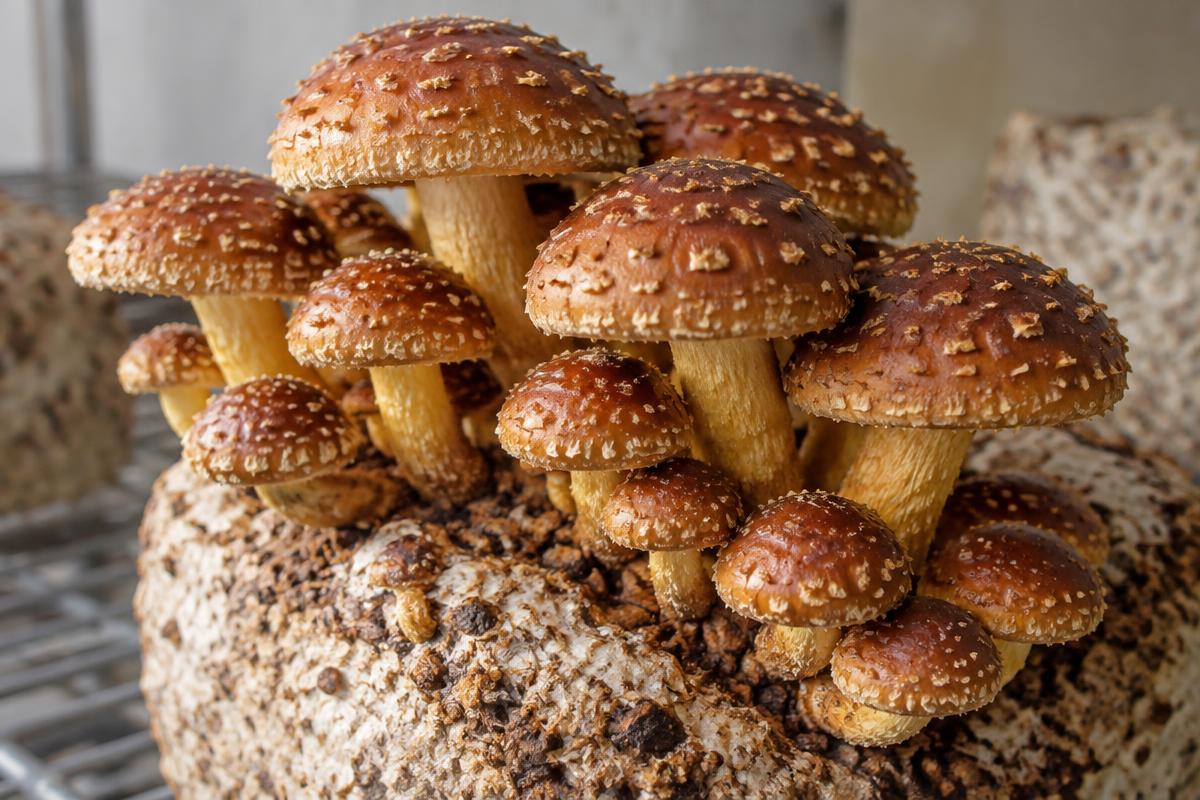
Nutty and pleasantly crisp when young. Cook thoroughly; a longer sauté softens the firm stems and develops flavour.
Spawn and substrate
Recommended grain spawn
Rye or millet grain spawn distributes well through hardwood blocks. Healthy cultures may show amber metabolites, but wet or foul-smelling grain is not normal.
Best bulk substrate
Sterilised supplemented hardwood sawdust is standard. A balanced hardwood pellet mix with bran or soy hull supports yield but requires reliable sterilisation.
Preparation approach
Hydrate consistently, bag with a filter and sterilise the full mass. Cool completely before inoculation and keep the filter unobstructed through colonisation.
Plan quantities with the spawn-to-substrate ratio calculator and set water using the substrate hydration calculator.
Fruiting environment
Fresh air and CO₂
Moderate-to-high fresh air. Too much carbon dioxide lengthens stems and delays cap expansion; over-ventilation cracks the cap surface and stalls pins.
Light and timing
Diffuse light helps pigmentation and direction. Avoid hot direct sun on the bag or block.
Approximate: 3–6 weeks for colonisation and consolidation, then 7–14 days from pins to harvest. Some cultures pause before the first pinset.
Estimate room exchange with the fruiting air-exchange calculator.
Container and method choices
- Top-fruited supplemented hardwood bag
- Side-fruited hardwood block
- Controlled indoor fruiting chamber
Step-by-step home cultivation
- 1
Source a verified cultivated Pholiota adiposa culture or clean grain spawn.
- 2
Inoculate a properly sterilised supplemented hardwood block.
- 3
Incubate until the block is firm and fully colonised, allowing extra consolidation where the supplier recommends it.
- 4
Expose a limited fruiting surface to humid, cooler air and diffuse light.
- 5
Harvest clusters young, before caps flatten and stems become fibrous.
Keep cultures closed while colonising, work cleanly, and isolate doubtful grows. Review the beginner's grain spawn guide before making your own spawn.
Common failures and contamination
- Amber droplets can be metabolites, but large wet zones, slime or off-odour warrant isolation.
- Sparse pinning can follow premature opening or poor surface moisture.
- Common-name confusion is a safety issue: do not apply this cultivation profile to a wild brown mushroom.
For cautious visual triage, use the mushroom contamination checker. It cannot confirm safety.
Harvest, storage and cooking
Harvest indicators
Cut clusters while caps remain rounded and the texture is crisp. Remove loose substrate from the base without washing the whole crop.
Storage and use
Refrigerate dry in a paper bag and cook thoroughly within several days. Do not eat specimens from contaminated blocks.
Scientific & biotechnology interest
Pholiota adiposa polysaccharides and phenolics are studied for antioxidant and other bioactivities, mostly in laboratory models.
Human clinical evidence is limited; in-vitro activity does not establish a health benefit from eating the mushroom.
Domestication and substrate research examines yield, nutritional composition and lignocellulose conversion.
Science and health disclaimer
Educational only and not medical advice. Do not infer treatment effects from cell, extract or animal research.
Frequently asked questions
References and further reading
Sources support the scientific and safety context; they are not recipes and may discuss extracts or experimental systems unlike whole food.
Related mushroom strains
Plan and track your grow
Use free calculators before inoculation, then keep dates, conditions, observations and harvest weights together in Hyphae Fidelity.