
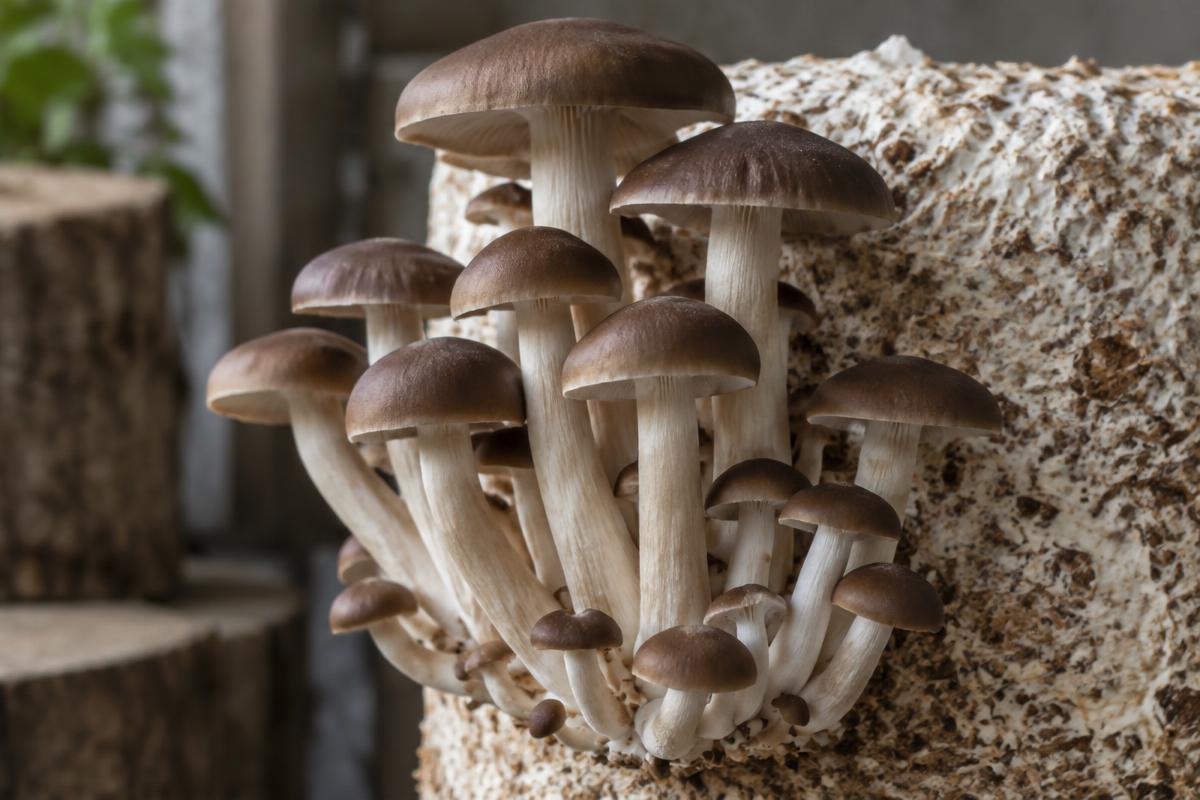
Taste and kitchen use
Firm, crisp stems and nutty caps suit sautéing, pasta and risotto. Cook thoroughly; harvest young for the best texture.
Spawn and substrate
Recommended grain spawn
Rye or millet provides dependable indoor spawn. Sawdust spawn is useful for logs. Check the supplier's species identity and fruiting-range notes because commercial strains vary.
Best bulk substrate
Sterilised supplemented hardwood sawdust is the reliable indoor approach. Hardwood logs or buried woody material can fruit outdoors more slowly where climate suits.
Preparation approach
Prepare a measured hardwood-supplement mix, bag and sterilise fully. After clean inoculation, allow the block to colonise and consolidate before exposing a top or side fruiting surface.
Plan quantities with the spawn-to-substrate ratio calculator and set water using the substrate hydration calculator.
Fruiting environment
Fresh air and CO₂
Moderate-to-high fresh air produces balanced stems and caps. Excess carbon dioxide stretches stems; harsh fan exposure dries the glossy young caps.
Light and timing
Diffuse daylight or cultivation lighting for part of each day supports pigmentation and direction.
Approximate: 3–5 weeks for colonisation and consolidation, then 7–14 days from pins to harvest. Logs and outdoor beds may take many months.
Estimate room exchange with the fruiting air-exchange calculator.
Container and method choices
- Top-fruited supplemented hardwood block
- Side-fruited filter-patch bag
- Hardwood log or woody outdoor bed
Step-by-step home cultivation
- 1
Confirm the supplier's culture is a cultivated pioppino strain and note its recommended fruiting range.
- 2
Inoculate a cooled sterilised hardwood block with clean rye or millet spawn.
- 3
Incubate until the block is evenly colonised and firm.
- 4
Open a controlled fruiting surface and provide cooler humid air with diffuse light.
- 5
Harvest clusters while caps are convex and stems remain tender.
Keep cultures closed while colonising, work cleanly, and isolate doubtful grows. Review the beginner's grain spawn guide before making your own spawn.
Common failures and contamination
- Very long stems and tiny caps suggest excess carbon dioxide.
- A dry block surface delays pinning; a waterlogged one invites bacteria.
- Misidentification is possible when relying only on commercial common names, so do not forage by comparing with cultivated photographs.
For cautious visual triage, use the mushroom contamination checker. It cannot confirm safety.
Harvest, storage and cooking
Harvest indicators
Cut clusters before caps flatten and spores become heavy. Trim the joined base and chill promptly.
Storage and use
Refrigerate in breathable paper and cook within several days. The firm texture holds up well to sautéing.
Scientific & biotechnology interest
Pioppino contains polysaccharides and phenolic compounds studied for antioxidant activity, primarily in vitro or in animals.
Human evidence is limited and does not establish disease prevention or treatment.
Cyclocybe enzymes involved in lignocellulose degradation are relevant to research on biomass conversion and fungal biotechnology.
Science and health disclaimer
Educational only. Chemical assays and preclinical models cannot be translated directly into human outcomes.
Frequently asked questions
References and further reading
Sources support the scientific and safety context; they are not recipes and may discuss extracts or experimental systems unlike whole food.
Related mushroom strains
Plan and track your grow
Use free calculators before inoculation, then keep dates, conditions, observations and harvest weights together in Hyphae Fidelity.