
Taste and kitchen use
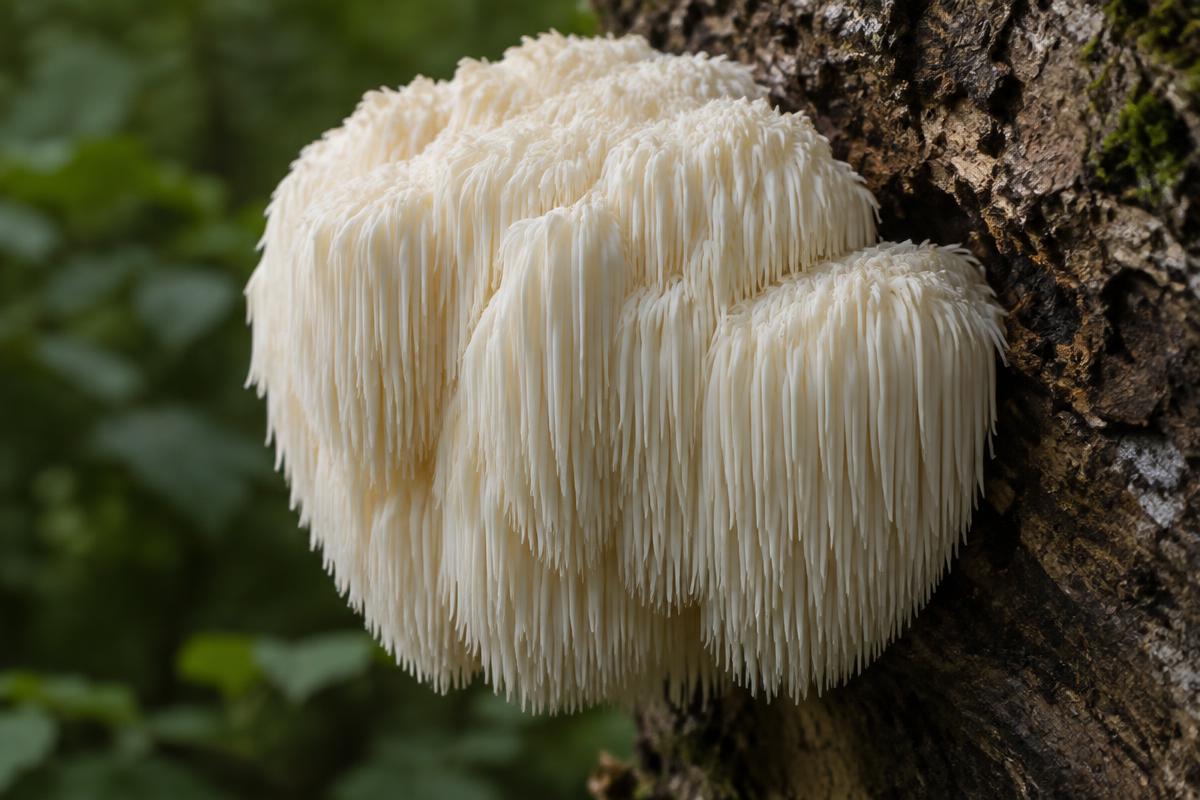
Young fruit bodies are tender with a mild shellfish-like savoury character. Slice or tear, press out excess moisture in the pan, then cook thoroughly until browned.
Spawn and substrate
Recommended grain spawn
Rye or millet are common. Lion's mane mycelium may look finer than oyster mycelium; assess even growth and smell rather than waiting for an unnaturally dense white grain jar.
Best bulk substrate
Sterilised supplemented hardwood sawdust is the standard productive substrate. Hardwood logs are possible outdoors but take much longer and crop seasonally.
Preparation approach
Hydrate hardwood pellets with a measured supplement, load filter bags and sterilise fully. Inoculate cleanly, mix well and minimise bag disturbance once early primordia appear.
Plan quantities with the spawn-to-substrate ratio calculator and set water using the substrate hydration calculator.
Fruiting environment
Fresh air and CO₂
Moderate-to-high fresh air. Coral-like branching with short teeth often signals excess carbon dioxide; yellowing and dryness can signal low humidity or direct airflow.
Light and timing
Soft, indirect light for 8–12 hours gives orientation. It does not need darkness during incubation, but stable low light reduces premature fruiting inside bags.
Approximate: 14–28 days to colonise and consolidate, then 7–14 days from a visible fruiting start to harvest. Some strains fruit early, while logs may take a year or longer.
Estimate room exchange with the fruiting air-exchange calculator.
Container and method choices
- Side-fruited hardwood block
- Top-fruited bag with controlled opening
- Outdoor hardwood log
Step-by-step home cultivation
- 1
Start with a clean culture or fully colonised grain spawn from a reputable source.
- 2
Inoculate a cooled, sterilised supplemented hardwood block and distribute the spawn.
- 3
Incubate until growth has reached the block and consolidation is evident; expect finer mycelium than oysters.
- 4
Cut one or two small fruiting openings where primordia form and provide humid, gently moving air.
- 5
Harvest while white with well-developed teeth, before yellowing, drying or softening.
Keep cultures closed while colonising, work cleanly, and isolate doubtful grows. Review the beginner's grain spawn guide before making your own spawn.
Common failures and contamination
- Branching coral without long teeth usually needs more fresh air.
- Yellow or pinkish surfaces may reflect age, dryness, metabolites or contamination; assess smell and substrate condition cautiously.
- Opening many holes encourages multiple small fruits and dries the block.
For cautious visual triage, use the mushroom contamination checker. It cannot confirm safety.
Harvest, storage and cooking
Harvest indicators
Cut at the base when teeth have elongated but the fruit remains white and firm. Handle gently to avoid bruising.
Storage and use
Refrigerate dry in breathable packaging and cook within several days. Do not consume raw or from a suspect block.
Scientific & biotechnology interest
Hericenones and erinacines are studied for neurotrophic and neuroprotective mechanisms. A large share of the evidence is cell or animal research.
Small human studies have explored cognition and mood, but samples and methods remain limited; results do not establish a medical treatment.
The species also contains beta-glucans, fibre and protein, and its mycelium and fruit body can differ chemically.
Science and health disclaimer
Educational only and not medical advice. Do not substitute mushrooms or supplements for diagnosis, treatment or prescribed care.
Frequently asked questions
References and further reading
Sources support the scientific and safety context; they are not recipes and may discuss extracts or experimental systems unlike whole food.
Related mushroom strains
Plan and track your grow
Use free calculators before inoculation, then keep dates, conditions, observations and harvest weights together in Hyphae Fidelity.