Taste and kitchen use
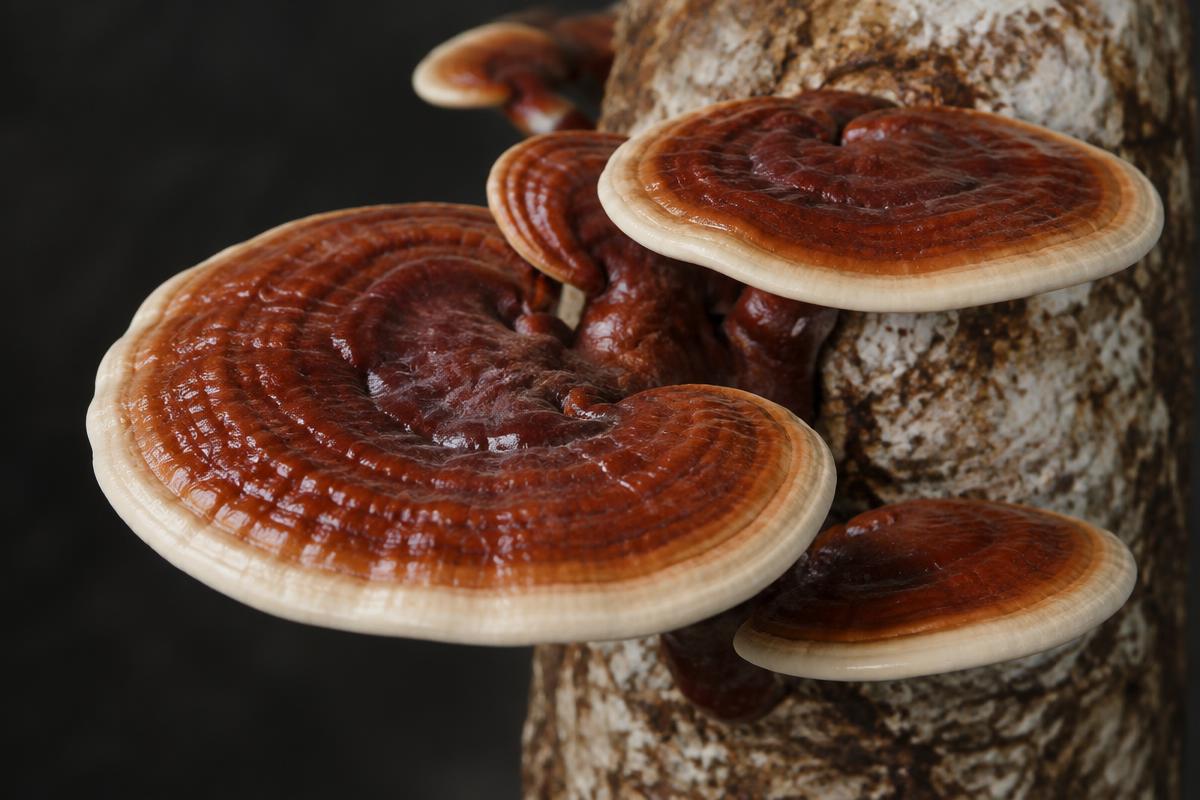
Mature fruit bodies are woody and intensely bitter, not a normal sautéed mushroom. Hyphae Fidelity does not provide supplement doses or treatment advice; cultivation here is educational and material-focused.
Spawn and substrate
Recommended grain spawn
Rye or millet grain spawn works for indoor blocks. Sawdust or dowel spawn suits logs. Buy from a supplier that states the culture's origin and taxonomic basis where possible.
Best bulk substrate
Sterilised hardwood sawdust, often supplemented, or suitable hardwood logs. Indoor blocks offer predictable morphology; logs are slower and seasonal.
Preparation approach
Sterilise supplemented hardwood blocks and inoculate cleanly. For logs, drill and inoculate fresh healthy hardwood, wax the holes and prevent prolonged drying.
Plan quantities with the spawn-to-substrate ratio calculator and set water using the substrate hydration calculator.
Fruiting environment
Fresh air and CO₂
Carbon dioxide is a morphology tool. Elevated levels favour branching antlers; more fresh air encourages broad conks. Change air gradually once antlers have reached the desired size.
Light and timing
Diffuse light supports pigmentation and direction. Provide a day/night rhythm without direct hot sun.
Approximate: 2–4 weeks to colonise a block, then 1–3 months to develop mature antlers or conks. Logs may need a year or more before fruiting.
Estimate room exchange with the fruiting air-exchange calculator.
Container and method choices
- Bag-contained antler block
- Opened bag for conk formation
- Outdoor hardwood log
- Decorative observation grow
Step-by-step home cultivation
- 1
Choose a clearly labelled cultivated Ganoderma culture and record the supplier's identification.
- 2
Inoculate a cooled sterilised hardwood block or prepared log.
- 3
Allow full colonisation; antlers may begin forming inside a sealed or lightly vented bag.
- 4
Maintain humid warmth. Keep carbon dioxide higher for antlers or progressively add fresh air for conks.
- 5
Harvest when growth margins stop expanding and the lacquered surface has matured; dry completely if retaining the fruit body.
Keep cultures closed while colonising, work cleanly, and isolate doubtful grows. Review the beginner's grain spawn guide before making your own spawn.
Common failures and contamination
- Pale antlers may need more light; thin weak growth may reflect poor substrate or temperature.
- Opening too early can dry antlers before conks form.
- Green mould, foul odour or soft wet substrate should be isolated. Reishi's colours are not a substitute for contamination assessment.
For cautious visual triage, use the mushroom contamination checker. It cannot confirm safety.
Harvest, storage and cooking
Harvest indicators
Cut mature fruit bodies at the base when the pale growing margin has largely disappeared and the surface is firm. Thick conks require careful, complete drying to avoid internal mould.
Storage and use
Fresh reishi is woody. If keeping it for display or permitted food preparation, slice when possible and dry until completely brittle, then store dry. This page provides no dosing guidance.
Scientific & biotechnology interest
Ganoderma polysaccharides and triterpenoids are extensively studied in extracts, cells and animals. Products and species differ, and standardisation remains a major issue.
Human clinical validation is limited for many popular claims. Traditional use and biochemical activity do not establish that home-grown material treats disease.
Mycelium, enzymes and tough fruiting-body composites are investigated for fermentation, biomaterials and lignocellulose-processing applications.
Science and health disclaimer
Educational only, not medical advice. Reishi may interact with medicines or be unsuitable for some people; discuss health use with a qualified clinician.
Frequently asked questions
References and further reading
Sources support the scientific and safety context; they are not recipes and may discuss extracts or experimental systems unlike whole food.
Related mushroom strains
Plan and track your grow
Use free calculators before inoculation, then keep dates, conditions, observations and harvest weights together in Hyphae Fidelity.